It’s a scenario everyone’s familiar with. You’ve got time on your hands, but there’s a lot to think about. You use the time sitting on the bus or reclined in bed to sort through those thoughts:
Gotta do laundry before it gets late. Should start at 10 to finish at 3. Need to get my clothes ready for tomorrow. Maybe something in green today? What vegetables should I buy from the store? Asparagus is a healthy option, but so are Brussels sprouts. I wonder how Dad’s doing. I’ll call him and remind him to take his medicine.
But, inevitably, something slips through the cracks. As you think in more detail about one topic, you begin to forget what the other topics were.
I wonder how Dad’s doing…I haven’t seen him in a few months…Does he still remember the Christmas joke?…I’ll call him and say hi…Oh, and I’ll make sure he’s been taking his vitamins…Mom forgets to ask him sometimes.
Waitaminute…what was I supposed to get from the store?!
It’s a pain when this happens, and while you can cycle through the other thoughts—laundry, preparing clothes, checking on a parent—that one thought is irretrievable. You’ve been hit by the four-item limit, a curse (or blessing?) we all share.
There are two types of memory: short-term and long-term. Not! At least, not just these. These two types of memory have subsets, and one of those subsets is working memory. Working memory is a more active version of short-term memory. It is information your brain is actively using.
So if someone says “Hi, my name is Brian,” and you become engaged in conversation with them, when you decide to recall their name five minutes later, that would be an instance of short-term memory. Meanwhile, working memory contains information you’re actively using in the present moment. If while Brian’s talking, you’re actively recalling the kind handshake he gave you, and you use that to judge his personality, that is using working memory.
The four-item limit is simple: we—mankind—can only hold 3-4 things in our working memory at once. Adding one more item will cause us to forget one of the previous items.
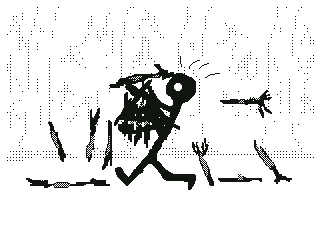
I’ve thought up a visual to explain my experience with the four-item limit: imagine carrying a bundle of sticks in the woods. You can only hold but so much, and when you have too many sticks, one or more will fall out the pile. You’re aware that a stick is missing, but you can’t stoop down to look at it without dropping the other sticks. But, if you come back later and are carrying less, you’ll be able to see it and retrieve it.
So how is forgetting any good for us? I mean, I certainly don’t feel happy when I’ve been productive all day but forget something important. I usually get stuck in my head for an hour trying to recall it.
Fear not: according to Tomás Ryan, Associate Professor of Biochemistry at Trinity College Dublin in Ireland, forgetfulness is what helps us remain adaptive to our environments. “You want to be able to adapt to your environment because your environment is always changing. But if you’re overly fixated on your first experience, you’re not going to behave adaptively.”
In my experience, the adaptive approach can definitely be rewarding. In the space of forgetfulness, I can schedule that doctor’s appointment I’d been putting off, or I can think up a healthy lunch.
Additionally, forgetfulness gives us the helpful power to generalize. According to Edwin Robertson, Professor of Brain and Cognitive Sciences at University of Glasgow, UK, the act of recalling minute details isn’t necessary for communication. He notes that, while chairs come in many shapes and designs, “remembering the exact details of a chair is potentially unhelpful because it prevents you from generalising across all instances of a chair.”
Scientists used to believe the limit to our working memory was higher, perhaps seven items, and in the present, it is known that some individuals are more adept at using their working memory than others. But regardless, all of us have employed tricks to go beyond the four-item limit.
What tricks, might you ask? Many tricks, like combining digits in phone numbers into 3-4 number strings instead of trying to recall each digit on its own. Or creating a movie in your head of six different objects or actions to remind yourself to do six different chores. When you combine two or more different images/senses, it becomes one thing in your head, one thing that can be separated when you need to recall the minutia.
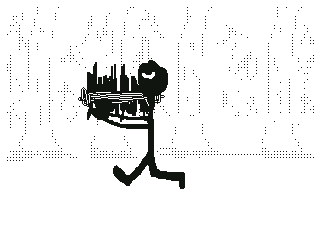
A metaphor I like for this is putting a rubber band around the bundle of sticks I mentioned earlier. With a rubber band around the bundle, there’s less risk of sticks falling, and you have room to carry more.
You can read more about the four-item limit in the Live Science article, “Mind’s Limit Found: 4 Things at Once,” by Clara Moskowitz. You can also find out more benefits to forgetfulness in Alex Wilkins’ New Scientist article, “Why forgetting things is a key part of the way your brain works”
Stay curious. Stay human.


Leave a Reply