The infinite monkey theorem: a thought experiment posed by Émile Borel that states an infinite number of monkeys sat at an infinite number of typewriter would inevitably, eventually type a direct copy of Shakespeare play. The idea of the theorem is that given a single event and infinite time, an infinite number of alternate outcomes are possible.
Allow me to precede this rant with an anecdote:
Once human babies grow old enough, they instinctively attempt to walk. They also instinctively babble and mimic the gestures and behaviors of those around them. Even though every human is unique in their own way, there are certain tendencies that we as a species all share.
And it’s not just in infancy—throughout life, there are behaviors and perceptions that only we as a species exhibit. One example is pareidolia, which is the phenomenon of seeing faces in inanimate objects like power outlets. Another example is the fear of spiders, a common fear in humans of all ages.
Animals, being emotional and instinctive creatures like us, also have biological tendencies. But because their lifestyles differ greatly from ours, and their brain and bodies are built differently, it stands to reason that their biological tendencies differ as well.
Monkeys DO NOT instinctively attempt to babble or learn to speak. Monkeys, of any species, come with different instincts and are stimulated by different forces in nature than we are. Smells that are gross to us may not bother them as much.
Which leads me to my gripe: how could even a single monkey, sitting with a typewriter, out of an infinite amount of monkeys, somehow press the correct keys to create a Shakespeare play? It’s ludicrous! To a monkey, all letters are just random symbols, and the factors influencing the next letter they press include: the position of their finger, their preference for each letter, their mood and emotional state, and their capacity to not get bored at a task that, for monkeys, is meaningless, since they don’t know they’re creating language.
That doesn’t even get into the fact that they’d have to be strapped at the typewriter! And it would take them hours to finish and they’d probably get hungry. Or if you gave the any of the monkeys a break, that would even further decrease the odds them of correctly typing Shakespeare, because the way they reenter the task (seating position, where they place their eyes, etc.) effects the next letter they press.
You can have an infinite amount of something and have duplicate results. That’s something that the infinite monkey theorem misses.
What I mean is, you can have an infinite number of planets in the universe, but NONE of those planets will be square-shaped; they obey certain laws of physics. Likewise, animals, diverse they may be, obey certain laws of nature.
I am surprised zoologists or neuroscientists haven’t pointed this out already. Just another cliché alive and well in the scientific community, I suppose. I still remember when that “humans only use 10% of our brains” idea was popular.
There’s something uniquely terrifying about head injuries. If you’ve broken an arm once, then the next time you’ll know what you’re in for. But when it comes to a bonk on the head… you’ll get a dice roll. And you’ll feel it, too. With an impact to the skull, your brain will jiggle, and a million outcomes are possible.
Amnesia, slurred speech, blurry vision—these are just a few of the potential dangers. But just as there are negative consequences, so too, on rare occasions, have head injuries unlocked a gift. A head injury like a concussion could turn an everyday person into an acquired savant. Acquired savants, also known as accidental savants, are individuals who gain increased intelligence, new senses, or artistic abilities following a traumatic brain injury. On that note, let’s talk about Jason.
A Man Struck By Genius
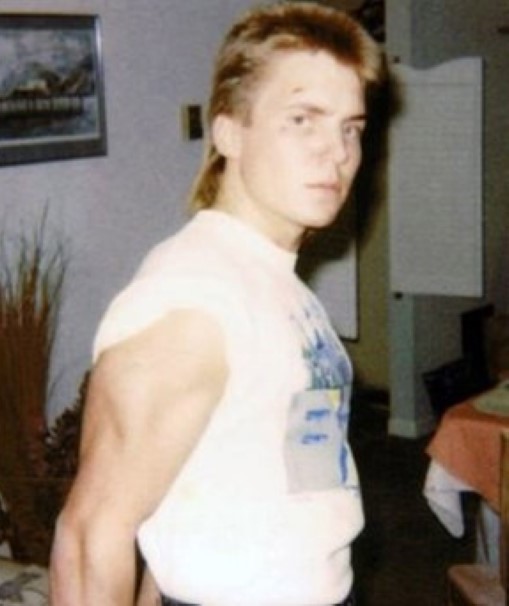
At age 31, Jason Padgett was a jock and a partier. The muscle man with a mullet had little interest in mathematics. But in 2002, after two men outside a bar bashed him in the head and robbed him, Padgett would get a concussion that would transform his life. That night, he developed OCD, obsessively washing his hands, and he’d go on to develop PTSD, social anxiety, and, most curiously, altered vision.
Padgett had developed a form of synesthesia. It’s a condition in which the brain processes the five senses differently. An example is tactile-emotion synesthesia, where touching certain textures evokes specific emotions in the person with the condition. Padgett’s synesthesia caused him to see mathematical shapes transposed on everyday objects.
Jason Padgett, prior to his accident, while he still enjoyed life as a jock and a partyer. (Courtesy of Jason Padgett)Jaison Padgett, years after his incident, having studied fractals and mathematics.(Courtesy of Jason Padgett.)
Trees, clouds, running water—to Padgett, all were pixelated. Even circles were: the angles were just so small that normal brains smoothed out the edges. With a new geometric view of the world, Padgett fell in love with mathematics. He’d study and soon learn about fractals—shapes within shapes to infinity—and he’d use the impeccable drawing skills gifted to him by his injury to create beautiful, geometric line art. In 2014 he’d publish a book about his experience titled “Struck by Genius.”
Acquired Savants The World Over
Padgett’s story is remarkable, but there are others like him. While their numbers are small, people with acquired savant syndrome come from all walks of life.
Anthony Cicoria was an orthopedic surgeon, but in 1994, at age 42, when a bolt of lightning struck him in the head, his inner pianist awoke, and Cicoria became a composer.
Orlando Serrell was just 10 years old in 1979 when a baseball knocked him unconscious, but once the headaches went away, he gained computer-like recall of every day since his accident.
Diana de Avila was 18 years old when she became a military police officer. But in 1984, a few months after she joined, she got in a motorcycle crash that caused severe head trauma. She would suffer health complications in the decades to come—but also, an awakening as a savant. In 2001, she was diagnosed with multiple sclerosis, and in 2017, after receiving a dose of steroids to treat her optic neuritis, she experienced a bout of hallucinations and became obsessed with painting. She’d create five or six pieces a day, and now she is an award-winning digital artist.
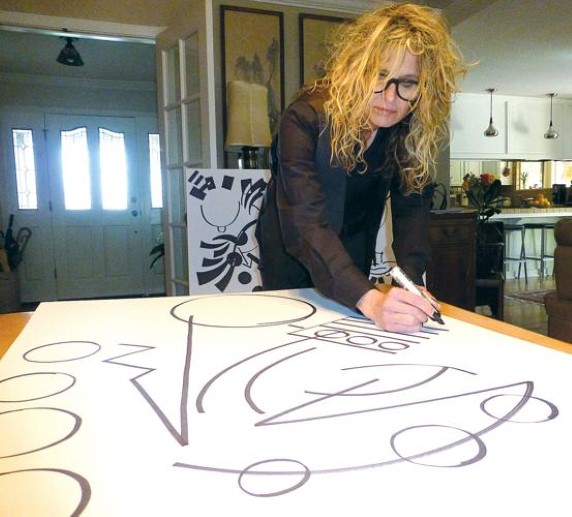
Leigh Erceg worked on a ranch in northwest Colorado and was more interested in NASCAR than creativity. But things changed after her injury. In 2009, at age 41, she fell into a ravine and her head and spine crashed into the rocks. After her long recovery, she not only began obsessively drawing, writing poetry, and doing advanced mathematics—she also gained a form of synesthesia. Her variant of synesthesia caused her to associate certain colors and shapes with specific colors in the alphabet.
Luck of The Die: Should We Study Savant Syndrome?
These stories are truly astounding, especially considering what it takes for non-savants to reach proficiency, let alone mastery, in any area. To gain skills involves attempts, failures, victories, experimentation, memorization, and time, so much time. But not for savants. Some savants start out their new skill with a level of mastery.
Leigh Erceg, creating artwork with a Sharpie marker. She also created the math equations on the wooden board underneath her pictures. (From left to right: courtesy of Anne Marie Fuller of Tracy Press; courtesy of ABC News.)
But are the abilities these people receive worth the risk? Acquired savants didn’t ask to get their talents. Whether it’s enhanced memory, synesthesia, or something else, the odds of getting a cognitive enhancement is one in a million. And even if an injured person gains a unique ability, it doesn’t change the fact that they’ve been injured.
After she fell in the ravine, Erceg went through months of recovery, having to relearn how to walk. She also lost a lifetime of memories, including the identity of her mother, and Padgett had to seek therapy for his PTSD and behavioral changes.
Still, it’s undeniably, grippingly fascinating what these people uncovered in themselves that they might never have seen. Despite the many setbacks their injuries caused, Padgett and Erceg both have expressed joy in finding new parts of themselves.
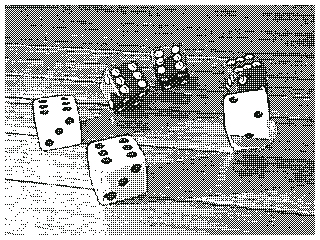
(Photograph by Author.)
Acquired savants get the lucky side of the die. Through accidents, through shear chance, they emerge from an injury not empty-handed, but with a gift. In the 21st century, a time where neuroscience is on the cutting edge, a question arises: should scientists study acquired savant syndrome in order to reproduce it without causing injuries?
There’s a lot of discourse around using genetics to create children with advanced intelligence or creativity. The goal is to enhance the human race. But one problem with genes is that they’re set in stone once you’re born; no adult alive today would stand to benefit from genetic experiments. Plus, infants can’t consent to having their genes altered or not. The advantage a hypothetical “savant treatment” provides is that it could be performed at any age, and it would be voluntary.
In addition to acquired savants, there are two other forms of savant syndrome. One form is congenital savant syndrome, also known as autistic savant syndrome. These individuals are born with a developmental disability but also have an artistic or intellectual talent.
The other form is a sudden savant syndrome. Discovered by psychiatrist Darold Treffert, sudden savants are everyday people who’ve never had a head injury yet randomly find themselves with a gift, such as being an expert at the piano one day despite never practicing. So far, his research center has only documented 11 cases in the world. Their identities have been kept secret.
With three known types of savant syndrome, there is a lot for scientists to discover about the condition—including how it could be unlocked within a person intentionally. But even if it’d be more advantageous than genetic enhancements, there’s an ethical question to ask as well.
There’s a high probability that privileged classes would get access to a “savant treatment” before everyone else. And who knows what selfish, egregious acts they would commit with enhanced intelligence or other abilities. In an ideal world, everyone would have the choice and access to enhance themselves or not, and there’d be no discrimination between those who do and do not.
I don’t believe we live in that ideal world, but I still want to dream. About what things could be like. Imagine the feats of creativity that would be possible, or the ability to switch on and off different forms of synesthesia. Imagine everyone having a high level of intelligence and using it to better society.
Whether or not this is achieved, a question remains: what exactly causes acquired savant syndrome? Why doesn’t every head injury lead to it? Let’s examine what happens to the brain following a concussion to see if any of the effects are related to savant syndrome.
The Inner Workings of The Brain’s Connectivity
The brain never gets a day off. It is always taking in and processing information from the outside world, and from the inside of your body. Concussions disrupt this flow. When the brain jiggles in the skull, short-term or permanent damage may occur.
A variety of, physical changes might be seen, including brain swelling, bruises, and bleeding. But sometimes, the changes are harder to detect.
In her May 9th, 2023 article for Live Science, titled Even mild concussions can ‘rewire’ the brain, possibly causing long-term symptoms, Anna Deming noted: “even mild traumatic brain injuries that don’t cause any observable structural damage can still trigger symptoms that persist for more than six months. These symptoms range from problems with concentration and fatigue to depression and anxiety.”
Structural changes to the brain aren’t always apparent in concussion victims—this applies to acquired savants as well. To MRI and to CT scans, the brain may appear normal. But it is with fMRI scans that changes in the brain’s connectivity can be detected.
Rebecca Woodrow, PhD student at University of Cambridge’s Division of Anesthesia, was the first to make this discovery. The details can be found in her August 2023 journal article, Acute thalamic connectivity precedes chronic post-concussive symptoms in mild traumatic brain injury. During the course of the study, which ran from the early to late 2010s, Woodrow and her team found traumatic brain injuries spur a significant increase in connections with the thalamus and the rest of the brain.
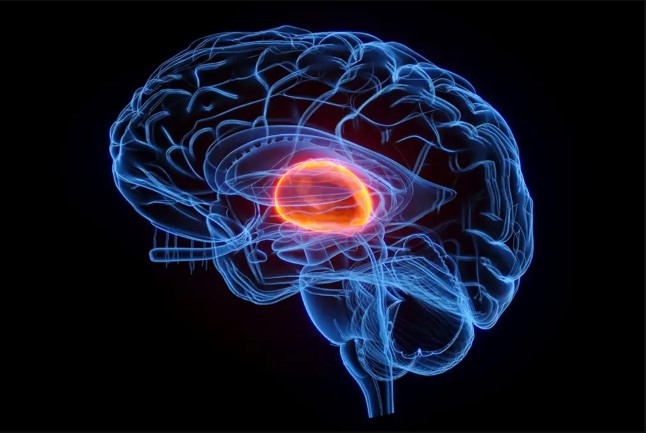
The thalamus’s location in the brain. (Courtesy of Shutterstock.)
The thalamus acts as the brain’s relay center: all sensory information like sight or smell must pass through it before being transmitted to its proper channel. The thalamus also processes complex info that relies on multiple brain regions at once, like the ability of concentration.
According to Woodrow’s hypothesis, parts of the brain become hyperconnected with the thalamus in order to adapt to the injury. Another theory she posited is that the thalamus could be responding to its own injury, rather than the injury of a separate brain area.
According to Deming of Live Science, some scientists believe that after the brain becomes hyperconnected, connections throughout the brain dwindle and become lower than usual, for a long-term period. But prior to the connections dwindling, the hyperconnected regions can predict what type of symptoms a traumatic brain injury victim will undergo.
Woodrow and her team found that whatever symptom patients went through—whether emotional changes or cognitive changes—correlated with the brain region or regions that were hyperconnected. Neurotransmitter levels in these areas were also affected, and Woodrow’s team believes studying these altered neurotransmitters could lead to new treatment methods for traumatic brain injuries.
So, what causes acquired savant syndrome? While there is no definitive answer, it’s possible it’s caused by the rewiring and hyperconnectivity that occurs between the thalamus and certain brain regions. Everyone’s brain is different, and everyone recovers from head injuries differently. There is still more for scientists to discover, but as they improve at understanding the brain, they will get closer to an answer.
In fact, there have been several scientists in the 21st century, like Allan Snyder or Berit Brogaard, who’ve created theories on how savant syndrome could be unlocked intentionally. One idea is that the left anterior temporal lobe is responsible. In studies Snyder has conducted, magnetically suppressing the LATL of neurotypical individuals causes them to temporarily become better artists or be able to solve difficult puzzles.
Stay tuned for a future article where I discuss more of these theories.
A Door to A New You
If Padgett and the other savants have taught us anything, it’s that all the secrets to ourselves live inside of us. The secrets to who we are. The secrets to who we could be. Secrets we might never have imagined. More creative. More intelligent. More curious. Ecstatic to perform a hobby we previously never had. All it takes is for something to unlock it. While the savants listed here have had that door unlocked by accident, one day, we could unlock that door with intention.
(Image Created With Microsoft Copilot.)
What do you think of savant syndrome? Do you think we’ll make any major breakthroughs this century? If you could ask someone who had this condition one question, what would it be?
We have agency in regards to the direction we go, but otherwise, we are all equally guided by the pull.
It is no compact spiraling disc silently shredding us and swirling us to its center. Nor is it of the mind, an emotion perhaps like greed. Rather, the pull is the mind itself, every facet of it, abstract and concrete.
Just as the stomach eternally demands and marches toward sustenance, so too does our brain compel us to absorb.
To achieve your ideal self through painstaking labor, and to then effortlessly, permanently reap the benefits of that ideal self—this is impossible. The bodybuilder must work out continuously if he wants to maintain his muscles. Likewise, the mind must always be steered in the direction of one’s desired thoughts or else it will drift. We are not cars—we aren’t given an autopilot.
It’s a scenario everyone’s familiar with. You’ve got time on your hands, but there’s a lot to think about. You use the time sitting on the bus or reclined in bed to sort through those thoughts:
Gotta do laundry before it gets late. Should start at 10 to finish at 3. Need to get my clothes ready for tomorrow. Maybe something in green today? What vegetables should I buy from the store? Asparagus is a healthy option, but so are Brussels sprouts. I wonder how Dad’s doing. I’ll call him and remind him to take his medicine.
But, inevitably, something slips through the cracks. As you think in more detail about one topic, you begin to forget what the other topics were.
I wonder how Dad’s doing…I haven’t seen him in a few months…Does he still remember the Christmas joke?…I’ll call him and say hi…Oh, and I’ll make sure he’s been taking his vitamins…Mom forgets to ask him sometimes.
Waitaminute…what was I supposed to get from the store?!
It’s a pain when this happens, and while you can cycle through the other thoughts—laundry, preparing clothes, checking on a parent—that one thought is irretrievable. You’ve been hit by the four-item limit, a curse (or blessing?) we all share.
There are two types of memory: short-term and long-term. Not! At least, not just these. These two types of memory have subsets, and one of those subsets is working memory. Working memory is a more active version of short-term memory. It is information your brain is actively using.
So if someone says “Hi, my name is Brian,” and you become engaged in conversation with them, when you decide to recall their name five minutes later, that would be an instance of short-term memory. Meanwhile, working memory contains information you’re actively using in the present moment. If while Brian’s talking, you’re actively recalling the kind handshake he gave you, and you use that to judge his personality, that is using working memory.
The four-item limit is simple: we—mankind—can only hold 3-4 things in our working memory at once. Adding one more item will cause us to forget one of the previous items.
I’ve thought up a visual to explain my experience with the four-item limit: imagine carrying a bundle of sticks in the woods. You can only hold but so much, and when you have too many sticks, one or more will fall out the pile. You’re aware that a stick is missing, but you can’t stoop down to look at it without dropping the other sticks. But, if you come back later and are carrying less, you’ll be able to see it and retrieve it.
So how is forgetting any good for us? I mean, I certainly don’t feel happy when I’ve been productive all day but forget something important. I usually get stuck in my head for an hour trying to recall it.
Fear not: according to Tomás Ryan, Associate Professor of Biochemistry at Trinity College Dublin in Ireland, forgetfulness is what helps us remain adaptive to our environments. “You want to be able to adapt to your environment because your environment is always changing. But if you’re overly fixated on your first experience, you’re not going to behave adaptively.”
In my experience, the adaptive approach can definitely be rewarding. In the space of forgetfulness, I can schedule that doctor’s appointment I’d been putting off, or I can think up a healthy lunch.
Additionally, forgetfulness gives us the helpful power to generalize. According to Edwin Robertson, Professor of Brain and Cognitive Sciences at University of Glasgow, UK, the act of recalling minute details isn’t necessary for communication. He notes that, while chairs come in many shapes and designs, “remembering the exact details of a chair is potentially unhelpful because it prevents you from generalising across all instances of a chair.”
Scientists used to believe the limit to our working memory was higher, perhaps seven items, and in the present, it is known that some individuals are more adept at using their working memory than others. But regardless, all of us have employed tricks to go beyond the four-item limit.
What tricks, might you ask? Many tricks, like combining digits in phone numbers into 3-4 number strings instead of trying to recall each digit on its own. Or creating a movie in your head of six different objects or actions to remind yourself to do six different chores. When you combine two or more different images/senses, it becomes one thing in your head, one thing that can be separated when you need to recall the minutia.
A metaphor I like for this is putting a rubber band around the bundle of sticks I mentioned earlier. With a rubber band around the bundle, there’s less risk of sticks falling, and you have room to carry more.
Neither does returning to a younger version of your body whilst keeping all your current memories. Y’know the brain is a physical thing, right? One that’s always changing shape, creating new neurons. And in each of these patterns of neurons are traits that make you who you are. Inhabiting another body would mean inhabiting a brain with a different neuronal structure. In other words, it’s like fitting a cube into a circle.
You can’t keep the host’s brain and simply transfer your consciousness into it. That assumes brains are computers and that consciousness is a simple file that can be sent or received—and that’s definitely not true, because it ignores the language centers and emotion centers and memory centers of the physical brain that are structured differently in each person.
And if your memories are in your physical brain, how can your consciousness access them if your consciousness is file transferred into another brain? It couldn’t. But, you would gain access to the host brain’s memories, until you swapped back your own brain… and swapping back to your own brain would give you your original memories back, but you’d lose the memories from the person whose body you swapped with. So essentially, swapping minds would do absolutely nothing.